The short answer
- Yes, in a 6V toddler ride-on, with you right beside them. Fisher-Price makes its 6V Power Wheels Lil’ Quad for 12 to 36 months, and it tops out at 2 mph, forward only.
- Not in a regular 12V car. Mattel rates its 12V Power Wheels for ages 3 to 7, and nearly every other 12V ride-on starts at age 3 too.
- Check your child first: they stay seated the whole ride, let go to stop when you say stop, and weigh well under the car’s limit.
- Drive on flat ground away from streets, driveways, pools and steps, with a parent remote in your hand or you within arm’s reach.
In September a parent on r/AskParents asked, “Is 2 too young for an electric ride-on jeep?” It depends more on the car than on the child, so here’s what the makers say, the checks I’d run, and how I’d set up the first rides.
On this page
What Do the Makers Say About Age?
Start with the age on the box. Fisher-Price’s own manuals say:
- Power Wheels Kawasaki Lil’ Quad (6V): ages 12–36 months, up to 40 lb, one rider. It goes 2 mph at most, forward only. Your child holds a button on the handlebar to go and lets go to stop.
- 12V Power Wheels like the Jeep Wrangler: ages 3–7, 2.5 mph in low and 5 mph in high, driven with a foot pedal.
Here’s how ages break down across the 177 ride-ons in my spec database:
| Type | Made for kids under 3 |
|---|---|
| 6V ride-ons | 8 of 19 (youngest age: 12 months) |
| 12V ride-ons | 0 of 64 (youngest age: 3 years) |
| 24V ride-ons | 0 of 86 (youngest age: 3 years) |
| 36V bikes and karts | 0 of 5 (youngest age: 6 years) |
| Push cars (no motor) | 2 of 3 (youngest age: 18 months) |
The eight 6V models made for under-3s are small quads, a bumper car and a motorcycle, with top speeds of 1.2 to 2 mph. Only one of the eight, the bumper car, lists a parent remote.
And 6V alone doesn’t make a car a toddler car: 11 of the 19 6V models start at age 3. My guide to ride-on ages covers older kids.
Is Your 2-Year-Old Ready? 5 Checks
Fisher-Price’s manual puts the call on you: before a child drives, an adult should “carefully evaluate the driving area as well as the child’s skill level.” These are the five things I’d look for.
- They stay on the seat. Mattel’s first riding rule is “Always sit on the seat.” A child who stands up or climbs off while it’s moving can fall or tip the car.
- They stop when you say stop. On a toddler quad, stopping means letting go of the button. Practice it with the car switched off first, then for real on flat grass.
- They can steer and hold the button at once. That takes both hands. The CDC’s list of what most kids do by age 2 includes holding something in one hand while using the other, and trying the buttons and switches on a toy. Following two-step instructions usually shows up closer to 30 months, so expect to repeat yourself.
- They fit the car. Stay well under the weight limit (40 lb on the Lil’ Quad, 44 lb on most toddler quads in my database), and check that their feet reach the footrests.
- They want to. Some 2-year-olds don’t like the motor noise. If yours climbs off, try again in a few weeks or start with a push car.
What Kind of Ride-On Fits a 2-Year-Old?
- 6V and slow. The toddler ride-ons in my database top out between 1.2 and 2 mph.
- A button or a parent remote. Toddler quads from Power Wheels, Kid Trax and Best Choice Products go while the button is held and stop when it’s released. A parent remote lets you steer and stop from behind. Most Power Wheels don’t have one, but some 6V bumper cars do. Here’s how a parent remote works.
- A seat belt or harness if the car has one. Most toddler quads don’t, which is one more reason to stay close.
The Lil’ Quad wasn’t available on Amazon when I checked in late September, so here are two from other brands. I picked them from the listings and manuals, not from our backyard.
Best Choice Products 6V Bumper Car: the parent-remote option. It’s made for ages 1.5 to 6 and up to 66 lb, with a 5-point harness and a 1.2 mph top speed.
The remote has forward, reverse and turn controls, so you can drive until your child can. The listing pitches it for bumping around the house, so think smooth floors and patios, not a bumpy lawn.

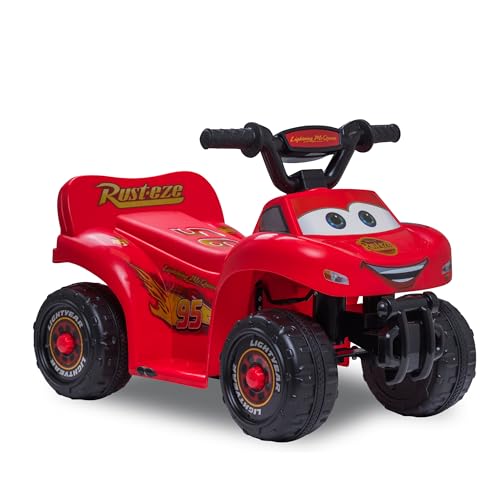
Kid Trax Toddler Lightning McQueen Quad: the walk-alongside option. It’s 6V and goes forward at up to 1.5 mph while your child holds the button.
It holds up to 44 lb, and the listing doesn’t mention a parent remote. The catch: the listing says 1.5 to 3 years in one place and 18 to 30 months in another, so a big 2-year-old may outgrow it by summer.
Shopping for Christmas? More toddler picks are in the Ages 1 to 3 section of my Christmas gift guide.
Can a 2-Year-Old Drive a 12V Power Wheels?
Not by the makers’ ratings. Mattel rates its 12V Power Wheels for ages 3 to 7, and none of the 64 12V ride-ons in my database is made for a child under 3. A 12V Power Wheels goes up to 5 mph in high, and you drive it with a foot pedal instead of a hand button.
The one 12V exception I’ve found is a toddler push car, not a regular ride-on. ANPABO’s 3-in-1 runs on 12V but is made for ages 1.5 to 3, with a push handle, a parent remote and a top speed of 2.5 mph.
I understand buying big so they grow into it. Going by the makers, though, a 12V car is a third-birthday gift, not a second. An age rating is about who rides, not only who drives, so I wouldn’t put a 2-year-old in the passenger seat of a 12V two-seater either.
How to Set Up the First Rides
- Charge it fully first. Fisher-Price wants at least 18 hours before the Lil’ Quad’s first ride, and only an adult should charge it, with the charger that came with the car. My charging guide has the times for other brands.
- Pick flat, open ground. A fenced yard or a patio with no cars coming. Fisher-Price’s list: away from pools and other water, steps, steep inclines, cars, roads and alleys, and never at night.
- Shoes on, and the belt or harness buckled if the car has one.
- Stay in reach. Hold the remote, or walk alongside with a hand ready. Near a slope, the manual warns, the car can pick up speed even after your child lets go of the button.
- Keep it short. I’d end the first rides at 10 to 15 minutes, while it’s still fun.
- Unplug it after. Fisher-Price suggests unplugging the battery when the car isn’t in use, so nobody drives it without you.
Safety first: Fisher-Price’s toddler manual says “Direct adult supervision required,” and Nationwide Children’s Hospital advises close supervision for any child under 8 on a riding toy. One rider at a time on a toddler quad. Never put a 12V battery or a drill battery on a 6V toddler car. When the battery wears out, replace it with the same 6V type and plug (see my replacement battery guide). My ride-on safety guide covers the rest.
FAQ
Can a 1-year-old ride a Power Wheels?
Some are made for it. Fisher-Price’s Lil’ Quad starts at 12 months, and most other toddler ride-ons in my database start at 18 months. Your child needs to sit steadily on their own, with you right there. For many 1-year-olds a push car is the better first ride.
Can my 2-year-old ride with an older sibling?
Not on a toddler quad, which is made for one rider. A 12V two-seater is made for ages 3 and up, so wait until your younger one turns 3.
Do toddler ride-ons come with a parent remote?
Most toddler quads don’t, including the Lil’ Quad, and neither do most Power Wheels. Some 6V bumper cars do, like the Best Choice Products and Kidzone bumper cars. Kidzone’s listing recommends using the remote for kids 1.5 to 3.
If your 2-year-old stays seated, stops when you say stop and fits the car with room to spare, a 6V toddler ride-on with you beside it is a good first car. If not, give it a few months, and look at a 12V car with a parent remote around their third birthday.
