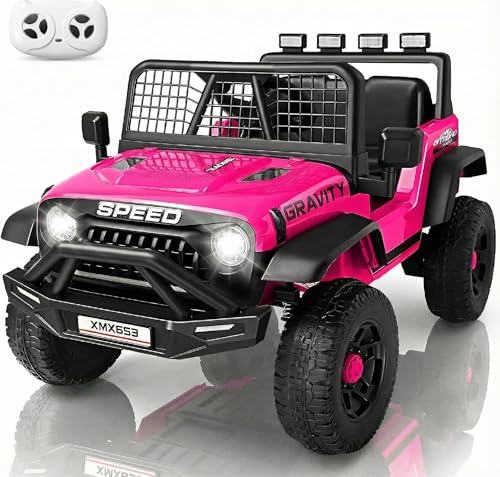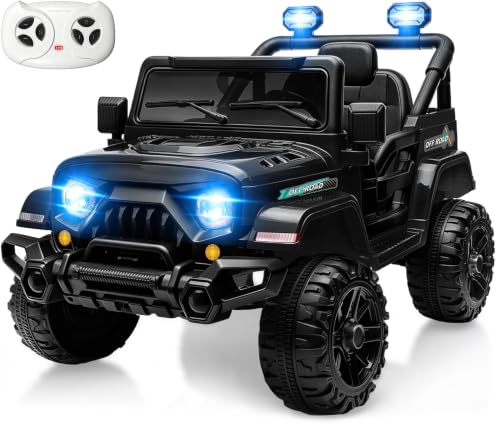

You can’t just replace a 12V battery with 24V batteries on a 12V ride on car; it needs a conversion first. It is possible to upgrade a 12V ride-on vehicle into a 24V ride on car to give your little one more speed and power. You need to collect the right tools and replacement parts for the process before starting the upgrade process.
Many parents make the mistake of switching out a 12V battery for a 24V battery or adding another 12V to a ride-on car. The problem with increasing the battery voltage without making changes under the hood is that it wires out.
More often, the car’s dashboard burns out, leaving you with a new battery and a broken toy car. This article explores all you need to know about transforming a 12V ride vehicle into a 24V ride-on toy car.
On this page
Why Would You Upgrade a 12V Battery?
Upgrading a 12-volt car to 18 or 24 volts takes more than a battery. You can add one 6V battery in series for 18V, or a second 12V battery for 24V, but the stock motors, plastic gears, switches and wiring are built for 12V. At 18V they run hotter and wear out faster, and 24V needs new motors, gearboxes and wiring.
Upgrading a 12-volt battery car can give your child more power to drive through wet grass or uneven terrain. They can even add a trailer once you are at 18V or higher.
It also allows a child to go faster than an older child. Converting a 12V toy into a 24V is affordable compared to buying a brand new toy car for your growing child. Higher voltage makes it faster, not longer-running: for more time between charges you need a battery with more amp hours (Ah).
You will need to be patient if you are trying to do a conversion for the first time. You can find an ideal video and watch it as you do the conversion for your little one.
Overall, it will take a little effort on your part to convert a 12-volt ride-on car. Your child will be grateful for the extra speed that you will add to the vehicle.
How Do You Change a 12V Battery Vehicle to a 24V Battery?
There are several essential steps for converting a 12-volt battery ride on the car into a 24-volt battery vehicle if you want to get it straight. You do not have to be a professional handyman to be able to do the conversion.
There are many videos on YouTube that teach parents how to. It is imperative that you gather all the supplies you need beforehand and set aside adequate time to do the conversion.
Check the Brand and Size of the Battery
Most kid’s ride-on car batteries are color-coded for easy identification when replacing parts. Ensure that you check the battery top color to determine the type of color of battery that you need for the conversion.
For example, Power Wheel has batteries with a green or red top. We have a full battery and charger replacement guide here.
The green ones do not work with vehicles that come with a red top and vice versa. Always check whether a particular brand manufacturer has a replacement battery for the toy cars model your little one.
Buying from the manufacturer increases the odds of compatibility between a battery and a ride-on car. You can opt to buy one 24V battery or two 12V batteries for the conversion.
Another aspect you need to consider is the size of the battery. Most batteries come with a sticker that indicates the size of the battery. You can also measure the space under the hood to see what size of a battery will fit in there.
Also, look at check the size of the battery that you are about to purchase to see whether it is compatible with the space in your child’s vehicle. A few centimeters in length and width can make a battery a little too big to fit.
Motor Capacity
A ride-on car battery fuels the motor and provides power to the toy. Most 12V ride on cars comes with a 12-volt engine, which may not withstand a 24-volt battery’s power.
Motors built for 12 volts can burn out fast at 24 volts: one of the biggest upgrade-parts makers says even a performance 550 motor may not last a day. It would be best if you bought 24-volt motors to replace the 12-volt engines in the toy cars.
Fuses
Fuses protect the wiring from too much current, not voltage. The stock Power Wheels battery has its own thermal fuse built in, so once you swap in a different battery pack, that protection is gone and you need to add one.
Put an inline fuse on the + wire, as close to the battery as possible, with 12 AWG or heavier wire. Size it for your wire and for what your new motors or kit call for (the JRRXM 24V conversion kit, for example, comes with a 25A fuse), and never bypass it.
Gearbox
It would be best to buy a new gearbox that is compatible with a 24-volt battery and motor. For starters, a stock 12V Power Wheels tops out around 5 MPH, and doubling the voltage roughly doubles that, to about 10 MPH, which the stock gears were never built for.
A 24V gearbox with steel gears won’t strip the way the stock plastic ones do. A soft-start speed controller rated for 24V is a separate part: it won’t make the car faster, but it smooths out starts, which is easier on the gears and helps keep the car working with the new parts.
Seat belts
Now that the car is going to be moving faster, safety is always important to consider. Check to make sure the seat belts are adequate for your child in the ride on car, if not you may want to upgrade the seat belts.
How to Do the Conversion
You will need tools like screwdrivers, pliers, wire strippers, a crimping tool and crimp connectors to help you put in the car’s new accessories. Start by turning over the vehicle and upgrading the wiring using 12g wires, removing the old ones.
Remove one wire at a time, replacing it with the new wire. That way, you won’t mess up the vehicle’s wiring, and it will function just right when you are done.
Don’t forget the inline fuse on the + wire. Once that part is over, you can replace the 12V motor with the 24V motor when doing a motor upgrade. Without doing an upgrade it can cause the motor to overheat.
Flip the car up and replace the 12-volt battery with the 24-volt battery. You should opt to replace the old gearbox with the new one, without doing this you can put the wires and gears in danger of shorting out.
If you choose to add a new gearbox, you will need a switch to convert the car from a 12V battery toy into a 24V. Before your child rides it, test it yourself with the wheels off the ground, then at low speed, and feel the wires and motors after a few minutes: if they’re hot, stop and find out why.
How Do You Hook Up Two 12V Batteries to Make 24 Volts?
It is possible to hook up two 12V batteries to create a 24V ride-on toy vehicle. The trick is to pack the two batteries close together and hook them up in an electrical series.
Connect the positive terminal of one battery to the negative terminal of the other; the two free terminals go to the car, with a fuse on the + wire. Use two identical, equally charged batteries, and charge the pack with a 24V charger or each battery on its own 12V charger. The diagram below shows an example.

- + terminal
- − terminal
- Wire
- Battery
Power Wheels Conversion Kit
A Power Wheels conversion kit is a handy option for parents who want to do the conversion as a DIY project. Most conversion kits are customized for specific models of ride-on cars for your little one.
Therefore, you will need to look for a Power Wheels conversion kit compatible with the toy car model that you own. They are available in online stores and major chain stores like Amazon or Walmart.
Can You Put a Car Battery in a Power Wheels?
It is not advisable to put a car battery in any Power Wheels. You can always buy replacement batteries that Power Wheels produces for their toy vehicles. It is also a bad idea to hook up a garden mower battery to Power Wheels Vehicles.
Will a Ride-on Vehicle Last After the Conversion?
Yes, it will when the conversion is done in the right manner. Do not buy any substandard materials for the conversion process.
Third-party 24V conversion kits, with a new wiring harness, switches, a fuse and 24V gearboxes, make the job easier if you are not handy with tools. Check that the kit fits your model. It would also be best if you bought the replacement batteries from the manufacturer or a reputable supplier.
What are the Common Problems after a Conversion?
Parents face a power problem after converting 12-volt ride-on cars into a 24-volt ride. The problem comes from buying a motor that consumes a lot of power at once.
You need to buy an engine that has a reasonable consumption for a 24-volt battery. High power output will reduce the battery’s running time and reduce the time a child can play with the car.
Another problem is that toy vehicles stop working a short while after the conversion. It may be due to an overload to the motor or burnout of the wires and fuses.
The problem arises because you change the output of the batteries without upgrading other parts of the vehicle. Sometimes the wiring is the problem because it can’t handle the new power output.
Are There Technicians Who Do Conversions?
Yes. You can find a handyman or technician willing to do a conversion on your little one’s ride on car. The charges will vary depending on the model that of the vehicle.
You can also ask the handyman to source the conversion materials if you do not use a conversion kit. You can ask for recommendations online from other parents who live in the same location as you do.
Conclusion
It is not ideal to directly put a 24V battery in a 12V toy vehicle. It is possible, but it’s a full rebuild of the motors, gearboxes and wiring, not a few minor changes. You can always find a handyman to do the conversion if you don’t have the skills and time to do it.
Another way to save time is to buy a conversion kit for the vehicle model that your kid drives. Parents need to collect all the supplies and tools before they start converting a 12V battery vehicle.
Overall, converting a 12V car can cost less than buying a new 24V ride-on, but a faster car needs an older, experienced driver, an adult watching and a helmet. Make sure to also store the battery correctly so it doesn’t go flat and be careful to not overcharge the battery.


Kevinsmak
Power Wheels dad. Writing RC Ride On Cars since the start.
Hello! I'm Kevinsmak; I have been a content producer of RC Ride On Cars since the start of this site. I have always enjoyed Power Wheels with my family. My two boys love them, and seeing this helps me make sure this website is very accurate for the safety and enjoyment of your family.
Please be careful and use at your own risk
None of the authors, contributors, administrators, or anyone else connected with RCRideOnCars.com, in any way whatsoever, can be responsible for your use of the information contained in or linked from these web pages.